Skip to content
HN Pool ConstructionJacksonville, FL

Gunite & Concrete Pools

Gunite and Concrete Pools in Jacksonville, FL

Custom shapes, tanning ledges, and spas built in sprayed concrete and finished to hold up in Florida sun and salt systems.

Mon-Fri 8am-9pm, Sat-Sun closed. We answer the phone.

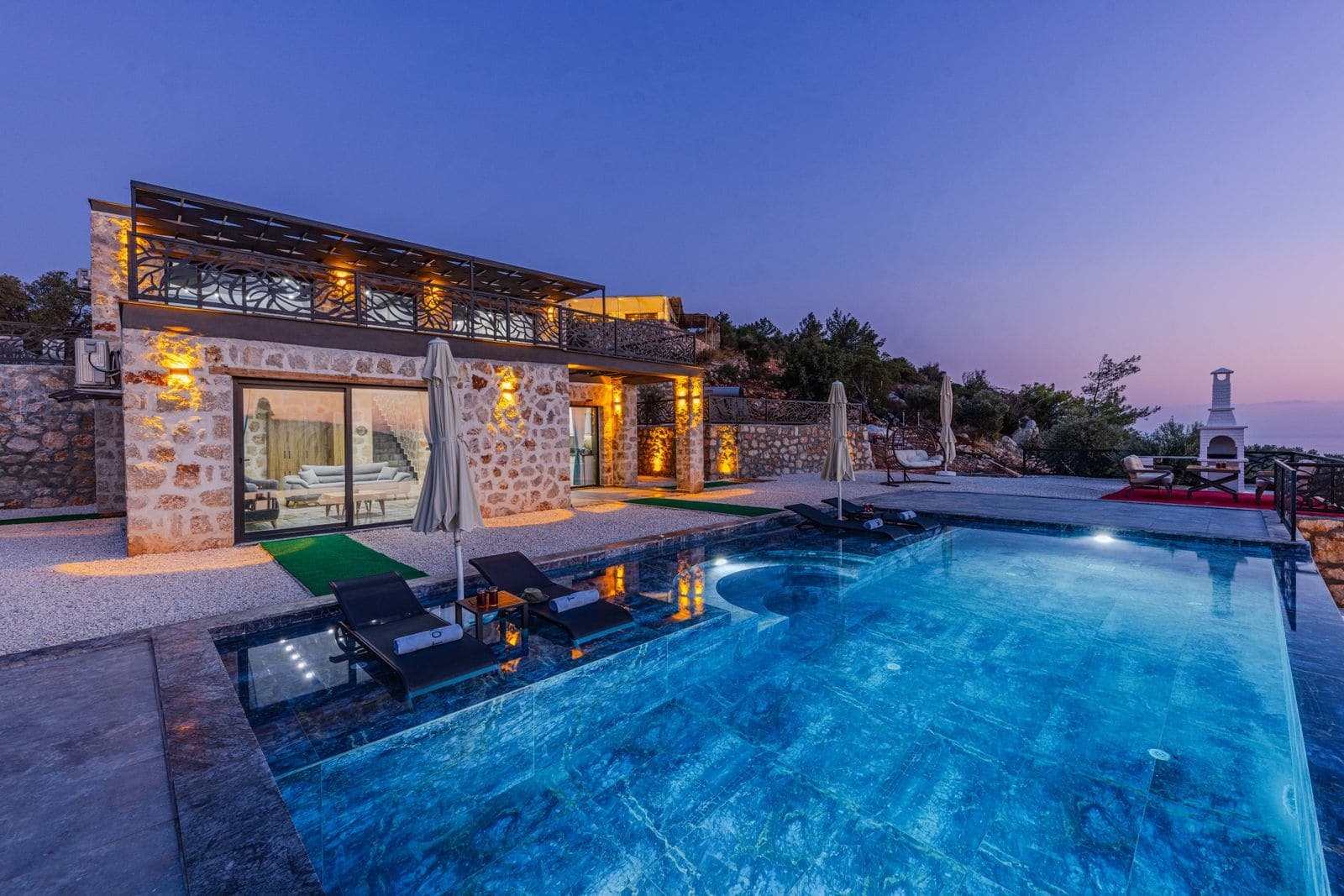
Custom shaped pool with a stone deck and landscape lighting at dusk
  • Licensed, insured builders

    Your pool is built by a licensed Florida pool builder you can look up

  • Fixed line-item pricing

    A fixed price for the scope you approve, priced line by line

  • 3D design first

    See the pool before a shovel touches the yard

  • Free on-site estimates

    No obligation

  • One point of contact

    The same person handles your design, your quote, and your questions

A gunite pool is built by spraying a wet concrete mix, called gunite or shotcrete, over a steel rebar cage shaped to the design. It is the most common choice for custom Jacksonville pools because the shape, depth, and features are not limited by a factory mold. A base gunite pool in this market runs $65,000 to $110,000 in 2026, and the build typically takes 10 to 16 weeks once permitted.

What is gunite and why do most custom Jacksonville pools use it?

Gunite is a dry or wet concrete mix sprayed at high pressure over a welded steel rebar frame that has already been shaped to the pool design. A crew hand-finishes the surface while it is still workable, then the shell cures before plumbing, tile, and the interior finish go in.

Because the shape starts as bent rebar rather than a mold, a gunite pool can be any freeform curve, a strict rectangle, or an L-shape wrapped around a lanai. That flexibility is why most custom pools built on the First Coast are gunite rather than fiberglass.
How does gunite handle tanning ledges, beach entries, and spas?

A tanning ledge, sometimes called a Baja shelf, sits under 6 to 12 inches of water at the shallow end and is simply part of the rebar shape before the gunite is shot. A beach entry slopes gradually into the pool instead of using steps, which works well for families with small children.

An attached spa is built with its own rebar cage and a shared or separate wall so it can run hotter water than the pool. Depth changes, swim-up bars, and sun shelves at different elevations are all ordinary requests for a gunite crew and add to the shell cost rather than requiring a separate structure.

How is the rebar and steel inspected before gunite is shot?

Before any concrete goes on, the building department inspects the rebar cage and the copper bonding grid that ties the pool, deck, and equipment together electrically. This steel and bonding inspection has to pass before the shell is sprayed, because the rebar disappears once it is covered.

The steel cage is tied to the engineered spacing for the depth and shape, the bonding wire goes in, and the inspection is scheduled so gunite is shot within a day or two of approval, before sun and rain can shift the steel out of place.

Plaster, quartz, or pebble: which finish lasts longest in Florida sun and salt?

Standard white plaster is the least expensive finish and the shortest lived here, often needing a recoat in 7 to 10 years as Florida sun, humidity, and a salt chlorine system wear the surface rough and stain it.

Quartz aggregate finish mixes ground quartz into the plaster for a harder, smoother surface that typically holds up 15 to 20 years. Pebble finish, made of small aggregate stones, is the most durable and often the longest-lived option, generally lasting 20 years or more with balanced water chemistry. Both quartz and pebble resist the salt-line etching that shortens plain plaster life, which is why most of our salt-system pools use one or the other.

What about tile and coping?

Waterline tile covers the band where the plaster meets the coping and hides the mineral scale line that forms there. Coping is the cap around the pool edge, most often travertine or poured concrete pavers in this market, and it needs to be set so it drains water away from the shell rather than back toward it.

How does curing and start-up work?

A plaster, quartz, or pebble finish needs to be filled with water within hours of application so it does not dry unevenly and crack. Start-up chemistry is balanced over the first several days, and quartz or pebble finishes are typically brushed daily during that period to work loose aggregate off the surface before it can scratch skin or swimsuits.

What is hydrostatic relief and why does a gunite pool need it?

Groundwater under an empty or low pool pushes upward on the shell, a force called hydrostatic pressure. A hydrostatic relief valve set into the main drain sump lets that groundwater rise into the pool instead of lifting the concrete, which matters on the sandy, high water table lots common across Duval and St. Johns.

We size the relief valve and, on lots where groundwater sits close to the surface, add a dewatering plan for excavation so the crew can tie steel and shoot gunite in a dry hole.

How much does a gunite pool cost and how long does it take?

These are 2026 estimates for the Jacksonville area. A base gunite pool with basic equipment and a minimal deck runs $65,000 to $110,000. Adding a spa, a tanning ledge, an upgraded quartz or pebble finish, LED lighting, and a heater moves the total to $110,000 to $180,000 or more, and our pool cost guide breaks each line item down further.

Once permitted, a gunite build usually takes 10 to 16 weeks from excavation to final inspection, longer if the design includes a spa, extensive tile work, or a screen enclosure built alongside it.

Want the numbers before you call?

Read the 2026 Jacksonville cost ranges, then decide what you want to ask us about.

Gallery

Gunite & Concrete Pools work

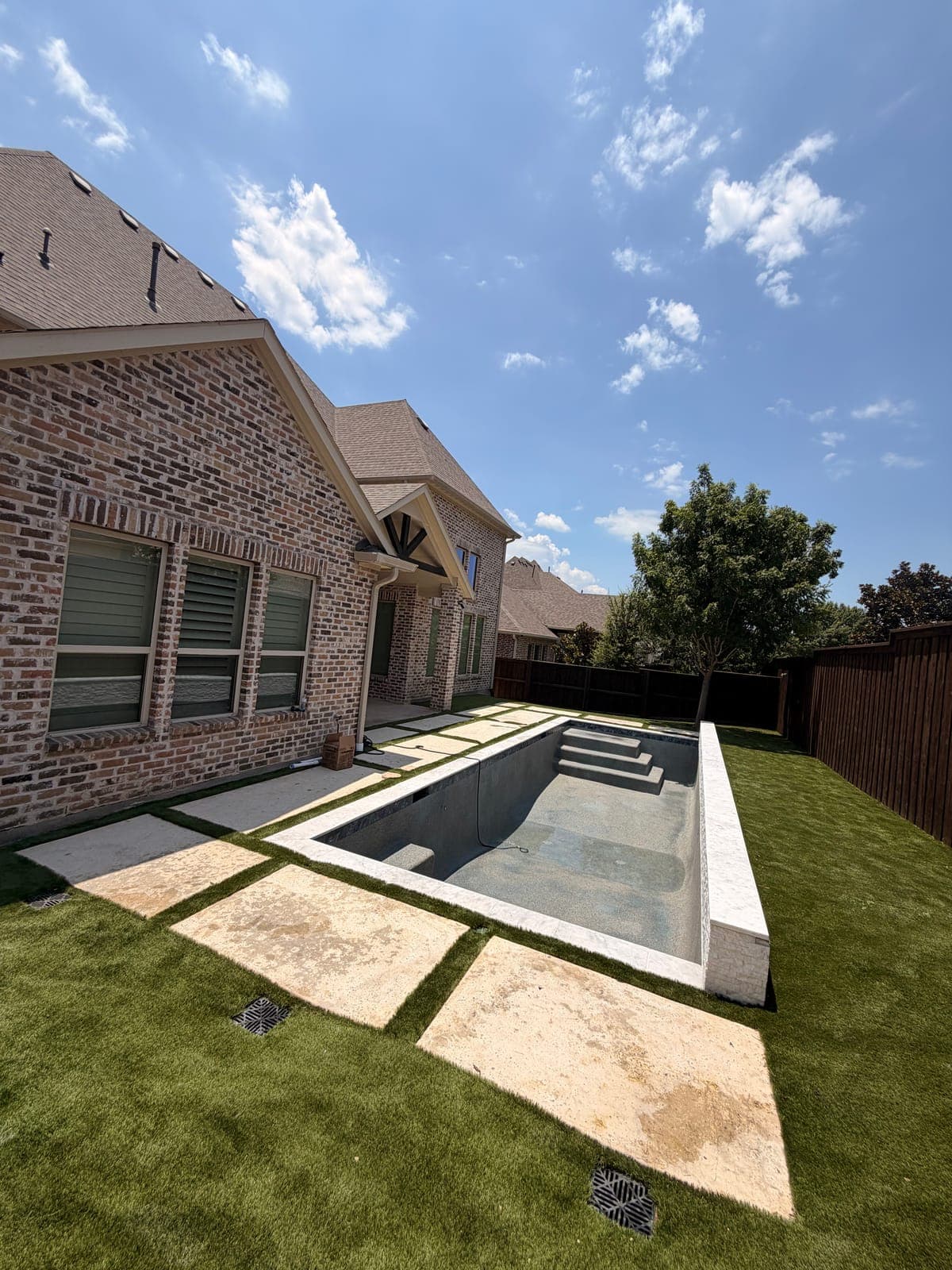
  • Newly plastered rectangular gunite pool with entry steps and a raised stacked stone wall, set in artificial turf with travertine stepping pads beside a brick home

    Rectangular gunite pool with a raised stone wall

    Fruit Cove, FL

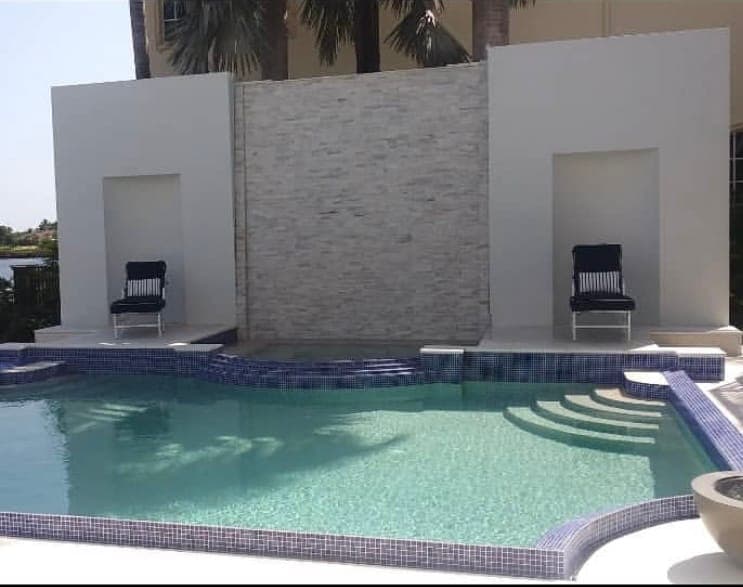
  • Gunite pool with a glass tile waterline, wide entry steps, and a white feature wall faced in stacked stone

    Pool with a stacked stone feature wall

    Fleming Island, FL

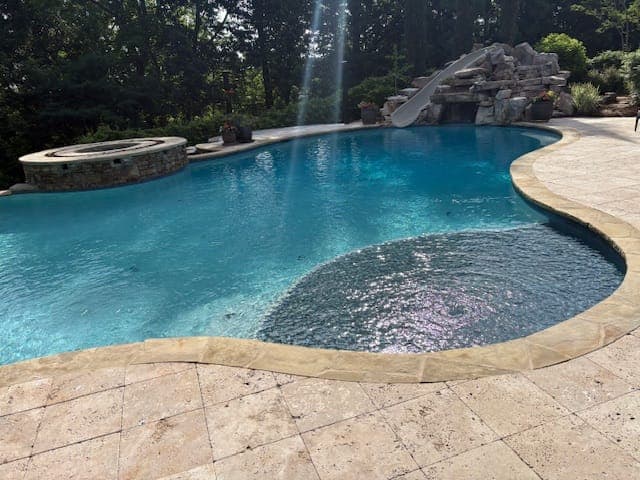
  • Freeform gunite pool with a travertine paver deck, a raised stacked stone spa, and a rock waterfall in a wooded backyard

    Freeform lagoon pool with a raised spa

    Ponte Vedra, FL

The process

How a gunite pool project runs

  1. 01

    Estimate

    We walk the yard, check access, grade, and setbacks, and talk through what you want. Free, and usually under an hour.

  2. 02

    3D design

    You see the pool, deck, and enclosure together in 3D before anything is dug. Shape, finish, lighting, all of it.

  3. 03

    Fixed quote

    A line-item quote. Shell, plumbing, equipment, finish, coping, deck, and cage each priced on their own line.

  4. 04

    Build

    A licensed Florida pool builder takes it from here, pulls the permit, and builds to the approved design.

  5. 05

    Walkthrough

    Once it passes final inspection you walk the finished pool with your builder, get the warranties, and learn how to run the equipment.

FAQ

Questions homeowners ask us

Free estimate

Get a fixed quote for your gunite pool

Pick a day that works. We confirm the time, walk the yard with you, and follow up with a 3D design and a fixed line-item quote.

  • Licensed, insured builders. Your pool is built by a licensed Florida pool builder you can look up.
  • Fixed line-item pricing. A fixed price for the scope you approve, priced line by line.
  • 3D design first. See the pool before a shovel touches the yard.
  • Free on-site estimates. No obligation.
  • One point of contact. The same person handles your design, your quote, and your questions.
CallGet Quote