Skip to content
HN Pool ConstructionJacksonville, FL

2026 cost guide

How Much Does a Pool Screen Enclosure Cost in Jacksonville, FL?

Per-square-foot ranges, roof style comparisons, and two worked examples for First Coast wind zones.

Mon-Fri 8am-9pm, Sat-Sun closed. We answer the phone.

Mansard style aluminium screen enclosure over a pool and paver deck
  • Licensed, insured builders

    Your pool is built by a licensed Florida pool builder you can look up

  • Fixed line-item pricing

    A fixed price for the scope you approve, priced line by line

  • 3D design first

    See the pool before a shovel touches the yard

  • Free on-site estimates

    No obligation

  • One point of contact

    The same person handles your design, your quote, and your questions

A pool screen enclosure in the Jacksonville area typically runs $18 to $35 per square foot of footprint in 2026, or about $18,000 to $45,000 for a standard 800 to 1,500 square foot cage. A taller gable cage or a picture-window super screen costs more per square foot because of the added engineering and framing needed to meet the local wind zone.

What you get at each price level

2026 estimates for the Jacksonville area. Your lot, access, and finishes move these numbers. A site visit is what turns a range into a fixed price.

  • Standard mansard

    $18 to $24 per sq ft

    Tall sidewalls with a low-slope roof, standard screen, engineered anchors, basic gutter.

  • Gable with taller walls

    $22 to $29 per sq ft

    Peaked roof profile, additional wall height, heavier framing for the added wind load.

  • Picture window super screen

    $28 to $35+ per sq ft

    Ultra-clear panoramic screen panels, marine-grade coatings, heaviest engineered framing and anchors.

What does a screen enclosure cost per square foot in Jacksonville?

Roof style is the biggest per-square-foot driver. A mansard roof, with tall vertical walls and a shallow-pitched top, is the most common and least expensive profile on the First Coast. A gable roof stands taller and needs more framing to resist wind, which raises the price. A picture-window super screen uses larger, nearly invisible panels for an unobstructed view and costs the most because of the panel size and the anchoring it requires.

2026 Jacksonville-area estimate by roof style
Roof styleCost per sq ftTypical use case
Standard mansard$18 to $24Most residential pools, good height without excess wind load
Gable, taller walls$22 to $29Higher ceiling feel, more framing for wind resistance
Picture window super screen$28 to $35+Unobstructed marsh, river, or golf course views

What does a screen enclosure cost by footprint size?

Footprint is the pool and deck area the cage covers, not just the water. A larger footprint spreads the fixed engineering and permit cost over more square footage, which is why the per-square-foot rate can look slightly better on bigger cages even as the total climbs.

2026 Jacksonville-area estimate by footprint (standard mansard)
FootprintTypical range
600 sq ft$11,000 to $17,000
900 sq ft$16,500 to $25,500
1,200 sq ft$22,000 to $34,000
1,800 sq ft$33,000 to $50,000+

What is the line-item breakdown of a screen enclosure?

A fixed quote breaks the cage into the same trades every time, so you can see what a bigger footprint or a taller wall actually changes.

Typical line items on an enclosure quote
Line itemWhat it covers
Engineering and permitSigned and sealed structural drawings for the site wind speed, permit filing and review
Aluminum frameBeams, columns, and bracing sized for the span and roof style
ScreenStandard, pet-resistant, or super screen panels, sized to each opening
DoorsSelf-closing, self-latching doors that can help satisfy the Chapter 515 barrier requirement
Anchors and footingsEmbedded or expansion anchors set into the deck at engineered spacing
GuttersPerimeter gutter and downspouts to route roof runoff off the deck
Electrical for fans and lightsCircuits for ceiling fans, cage lighting, and outlets inside the enclosure

What drives screen enclosure costs up in Jacksonville?

Wind zone is the single biggest cost factor on the First Coast, and it is not the same everywhere.

  • Wind zone at the beaches: under the Florida Building Code, 8th Edition, ultimate design wind speeds run roughly 120 to 140 mph across Duval, St. Johns, Clay, and Nassau counties, with Jacksonville Beach, Atlantic Beach, Neptune Beach, Ponte Vedra Beach, and Amelia Island at the high end and inside the wind-borne debris region, which needs heavier framing and closer anchor spacing.
  • Height: a taller gable cage or a two-story lanai enclosure carries more wind load than a low mansard, which means larger structural members.
  • Super screen: picture-window panels cost more per panel and need engineered mullions to hold the larger openings.
  • Marine grade coatings: within a few miles of saltwater, we specify marine-grade powder coating and 316 stainless fasteners so the frame does not streak or corrode early, which adds cost over standard coastal-grade finish.
  • Deck condition: an existing deck that is cracked, out of level, or too thin for engineered anchors may need repair or reinforcement before the cage goes up.

Should you rescreen or replace your enclosure?

Torn or sagging screen panels alone are usually a rescreen job, not a full rebuild. Rescreening a standard cage typically runs a few thousand dollars depending on panel count and screen type, far less than a new structure.

Replacement makes sense when the aluminum frame itself is bent, rusted through, or was never engineered to current wind standards, which is common on enclosures built decades ago. A structure that failed in a storm, or one an inspector flags during a permit for other work, is a signal to replace rather than patch.

How does storm damage and insurance affect enclosure cost?

Wind and hail damage to a screen enclosure is often covered under a standard homeowners policy, subject to your deductible and any specific exclusions for detached structures. Document damage with photos before any repair and get a written estimate for the claim.

An enclosure rebuilt to current Florida Building Code wind standards after storm damage should carry updated Florida Product Approval documentation for the framing and screen system, which your builder should provide as part of the permit closeout.

What permits does a screen enclosure need by jurisdiction?

A screen enclosure is a separate permit from the pool permit, with its own inspection. In Duval County the City of Jacksonville Building Inspection Division handles it, except inside Jacksonville Beach, Atlantic Beach, and Neptune Beach, which run their own building departments. St. Johns County Building Services covers Ponte Vedra Beach, Nocatee, St. Johns, and Julington Creek, while the City of St. Augustine has its own department with historic district review downtown. Clay County Building Division covers Fleming Island, Middleburg, and unincorporated Orange Park, with the Town of Orange Park handling its own permits. Nassau County Building Department covers unincorporated Amelia Island and Yulee, with the City of Fernandina Beach running its own department and historic district review.

How do you maintain a screen enclosure in Jacksonville?

Rinse the frame and screen periodically to clear salt residue near the coast and pollen inland, both of which etch aluminum and clog screen mesh over time. Check gutters for debris after oak pollen season and before hurricane season. Inspect door closers and latches yearly since they are part of your Chapter 515 safety compliance if the cage serves as your pool barrier.

Worked example: a mansard cage in Fleming Island

A 1,000 square foot mansard cage over a pool and paver deck in Fleming Island, an inland Clay County site with a moderate wind speed compared to the coast, runs roughly $20,000 to $26,000 at $20 to $26 per square foot. That figure includes engineering, permit, standard screen, doors, footings, and a basic gutter. Adding cage lighting and a ceiling fan circuit typically adds $1,500 to $3,000.

Worked example: a picture-window cage in Ponte Vedra Beach

A 1,400 square foot picture-window super screen cage in Ponte Vedra Beach sits inside the higher coastal wind zone and the wind-borne debris region, which raises both the engineering requirement and the per-square-foot rate. At $28 to $35 per square foot, the structure runs roughly $39,000 to $49,000. Marine-grade coating and 316 stainless fasteners for the salt air environment, plus a heavier gutter system for the larger roof area, typically add another $4,000 to $7,000.

How do you get a fixed quote for a screen enclosure?

A free on-site estimate confirms your address wind zone, deck condition, and any HOA color or height restrictions. We produce a 3D design so you can see the cage profile before we file the permit, then a fixed line-item quote covering engineering, frame, screen, doors, anchors, gutters, and electrical, with any change quoted in writing before it happens.

Gallery

What these budgets look like

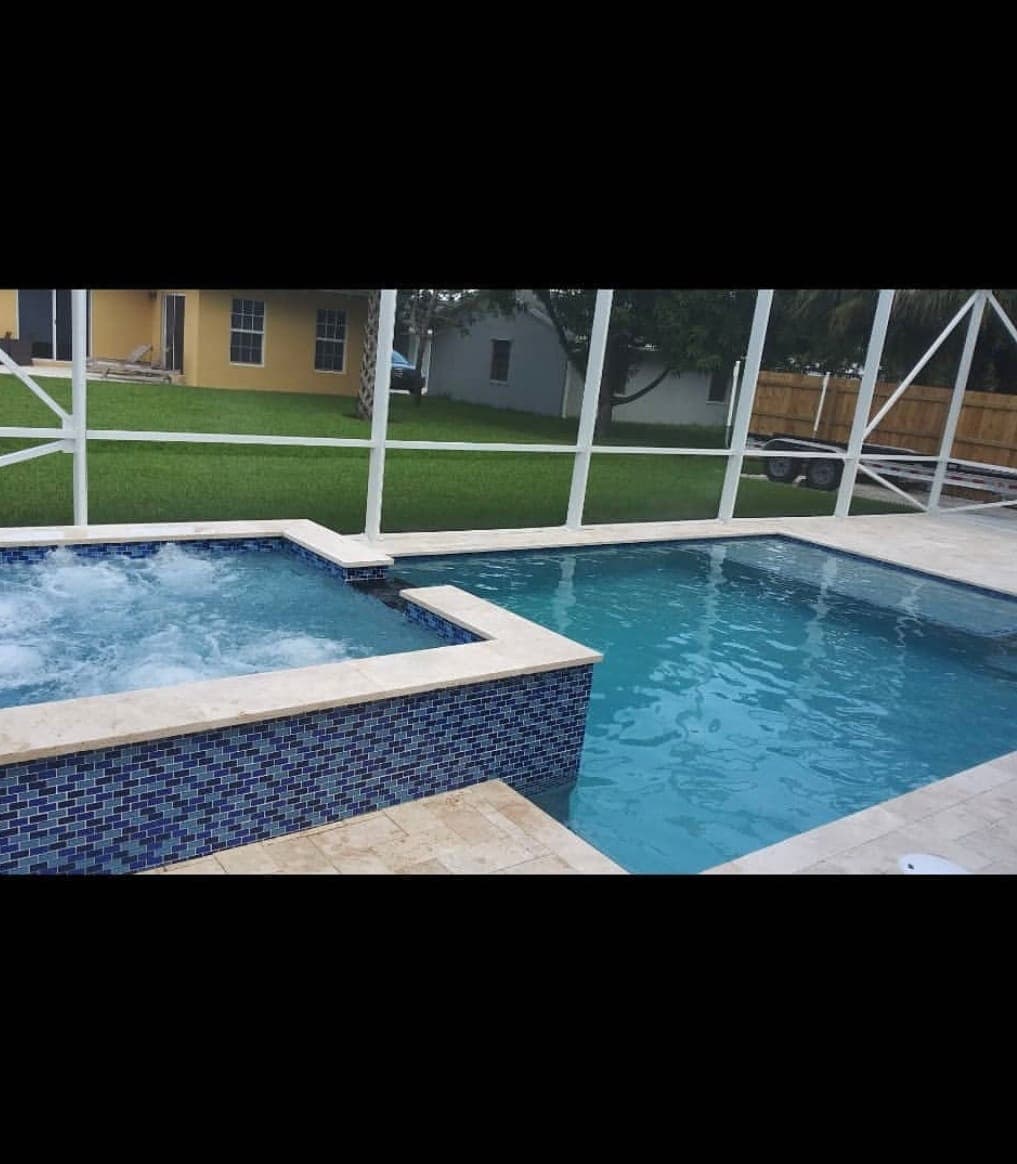
  • Pool and raised spa finished in blue glass tile, with a travertine deck under a white aluminum screen enclosure

    Screened pool and raised spa

    St. Johns, FL

FAQ

Cost questions we get asked

Free estimate

Turn this range into your number

A free site visit is what separates a range from a price. We measure, check access and grade, and send a line-item quote.

  • Licensed, insured builders. Your pool is built by a licensed Florida pool builder you can look up.
  • Fixed line-item pricing. A fixed price for the scope you approve, priced line by line.
  • 3D design first. See the pool before a shovel touches the yard.
  • Free on-site estimates. No obligation.
  • One point of contact. The same person handles your design, your quote, and your questions.
CallGet Quote